How to Use a Skills Gap Analysis to Choose the Right Training for Your Career Goals
How to Use a Skills Gap Analysis to Choose the Right Training for Your Career Goals
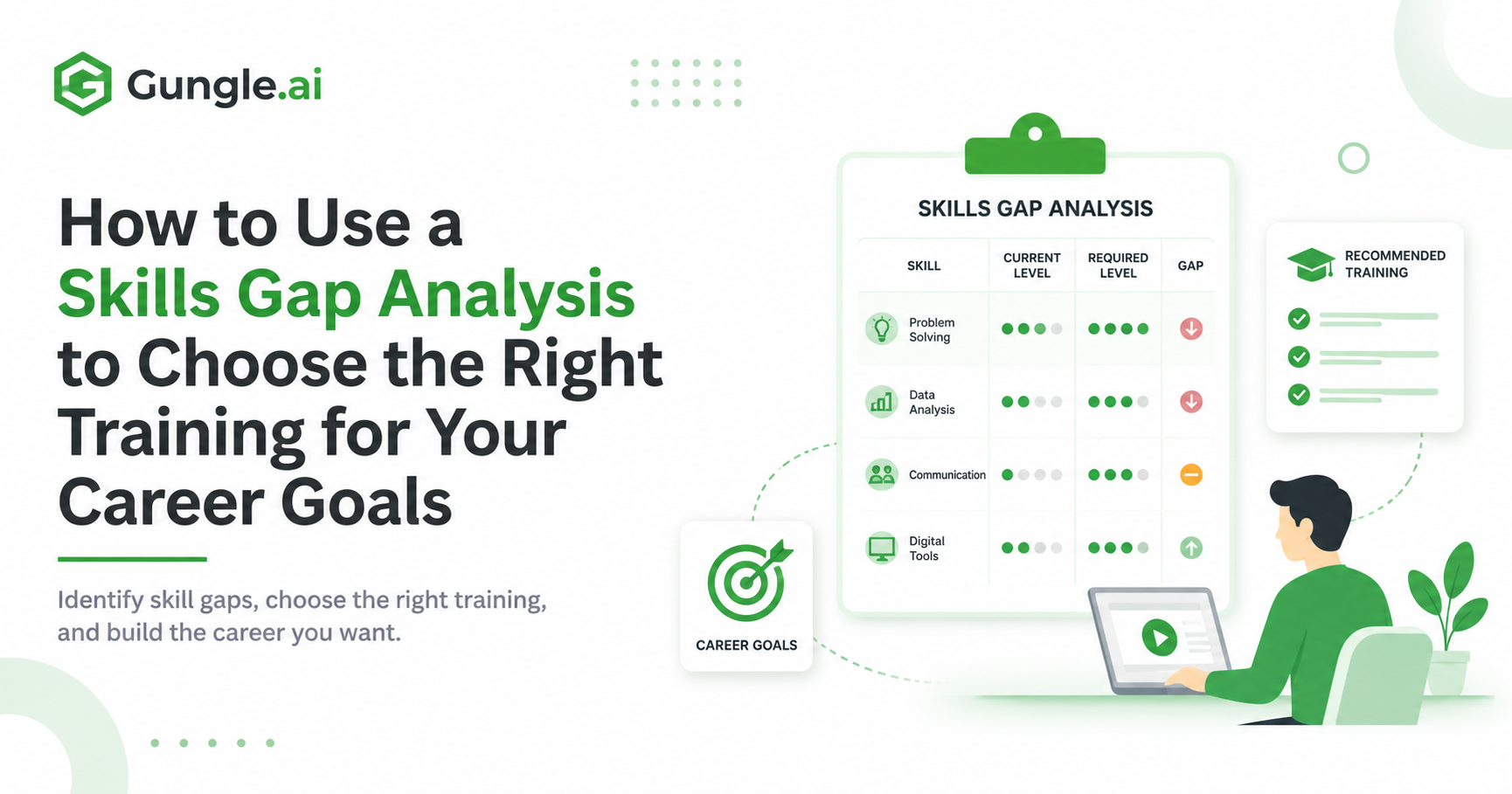
A skills gap analysis helps you compare the skills you have with the skills required for a target job, promotion, or project. Instead of choosing training because it is popular, you can focus your time and money on capabilities that directly support your career goals.
The same process works for job seekers, employees, managers, and learning and development teams. It can support an individual career plan, an employee skills gap analysis, or a broader workforce skills gap analysis.
What Is a Skills Gap Analysis?
A skills gap analysis identifies the difference between current capabilities and required capabilities. These may include:
- Technical skills: Data analysis, programming, accounting, design, or operating specialized tools.
- Transferable skills: Communication, problem-solving, project management, and leadership.
- Knowledge: Industry concepts, regulations, processes, or product expertise.
- Experience: Applying a skill in realistic situations, not simply understanding the theory.
- Qualifications: Degrees, licenses, or certifications when employers require or prefer them.
A skills gap assessment is not a judgment of your overall ability. It is a practical comparison tied to a specific goal. Someone may be highly skilled but still have gaps when moving into a different role.
How to Conduct a Skills Gap Assessment
1. Define a specific career goal
Start with a clear target, such as “qualify for entry-level data analyst roles” or “move from individual contributor to marketing manager.” A vague goal makes it difficult to identify relevant skills.
Review several current job descriptions for your target role. Note repeated responsibilities, tools, qualifications, and experience requirements. Do not assume one listing represents the entire occupation because requirements vary by employer.
2. Build a list of required skills
Separate essential capabilities from preferred ones. You can group them into technical skills, workplace skills, industry knowledge, and evidence of experience.
For example, someone targeting project coordinator roles might find recurring requirements such as stakeholder communication, spreadsheet proficiency, risk tracking, and project documentation.
3. Rate your current proficiency
Use a simple scale and define what each rating means:
- 0: No experience
- 1: Basic awareness
- 2: Can complete tasks with guidance
- 3: Can work independently
- 4: Can handle complex work or guide others
Support each rating with evidence. Evidence might include work samples, completed projects, performance feedback, assessments, or measurable results. Completing a course is useful evidence of learning, but it does not always demonstrate independent application.
4. Prioritize the gaps
Not every gap needs immediate attention. Give priority to skills that are frequently requested, essential to performing the role, and realistic to develop within your timeline.
Consider whether a missing skill would prevent you from applying, reduce your competitiveness, or simply be helpful later. This keeps your development plan manageable.
A Practical Skills Gap Analysis Template
Use the following skills gap analysis template in a spreadsheet or document:
- Career goal: What role, promotion, or responsibility are you targeting?
- Required skill: What capability do employers or managers expect?
- Target level: What proficiency does the role require?
- Current level: What can you do now?
- Evidence: How can you verify your rating?
- Gap: What is missing?
- Priority: High, medium, or low?
- Learning action: Course, project, coaching, practice, or another option?
- Success measure: What will prove that the gap has closed?
- Target date: When will you review your progress?
For example, an aspiring data analyst may rate spreadsheet skills highly but have limited SQL experience. The learning action could combine an introductory SQL course with a portfolio project that answers business questions using a sample dataset. The success measure might be writing common queries independently and explaining the results.
Turn Your Results Into a Training Needs Analysis
A training needs analysis determines what learning intervention, if any, will close each priority gap. Training is not always the answer. A person who understands a process but lacks practice may benefit more from a project, mentoring, job shadowing, or stretch assignment.
Before choosing a program, ask:
- Does the curriculum match the gap? Review learning outcomes, not just the course title.
- Is the level appropriate? Avoid paying for introductory material you already know or advanced content without the prerequisites.
- Does it include practice? Look for exercises, feedback, projects, or realistic scenarios.
- Can you demonstrate the result? Favor learning that produces a work sample or observable improvement.
- Does the format fit your constraints? Consider schedule, cost, accessibility, and completion time.
- Is formal recognition necessary? Verify whether target employers require a credential before investing in one.
For an employee skills gap analysis, managers should involve the employee rather than rating skills without discussion. At the organizational level, a workforce skills gap analysis combines role requirements and employee capabilities to identify shared development needs. Individual results should still lead to specific actions, not a generic training catalog.
Common Mistakes to Avoid
- Using only one job description as evidence of market demand.
- Confusing course completion with job-ready proficiency.
- Trying to close every gap before applying for opportunities.
- Choosing training based on popularity rather than learning outcomes.
- Ignoring transferable skills and existing experience.
- Failing to reassess after completing training or practical work.
Frequently Asked Questions
How often should you update a skills gap analysis?
Review it when your career goal changes, after completing major training, or when target job requirements shift. A regular review can also help you record new evidence and adjust priorities.
Can a skills gap assessment help with a resume?
Yes. It can show which skills to develop and which existing strengths deserve greater visibility. Match relevant resume language to the job description, but only claim skills you can support with truthful examples.
Do you need to close every skills gap before applying?
No. Job descriptions often include both essential and preferred criteria. Focus first on gaps that affect core responsibilities, then continue developing lower-priority skills while applying to suitable roles.
Make Training Serve Your Career Goal
A skills gap analysis turns professional development into a focused plan. Define your target, compare required and current capabilities, prioritize meaningful gaps, and choose training that includes relevant practice and measurable outcomes.
Ready to connect your development plan with real opportunities? Explore relevant job openings on Gungle.ai, compare employer requirements, and see where your skills could take you.