How to Handle Job Rejection and Turn Feedback Into Future Career Success
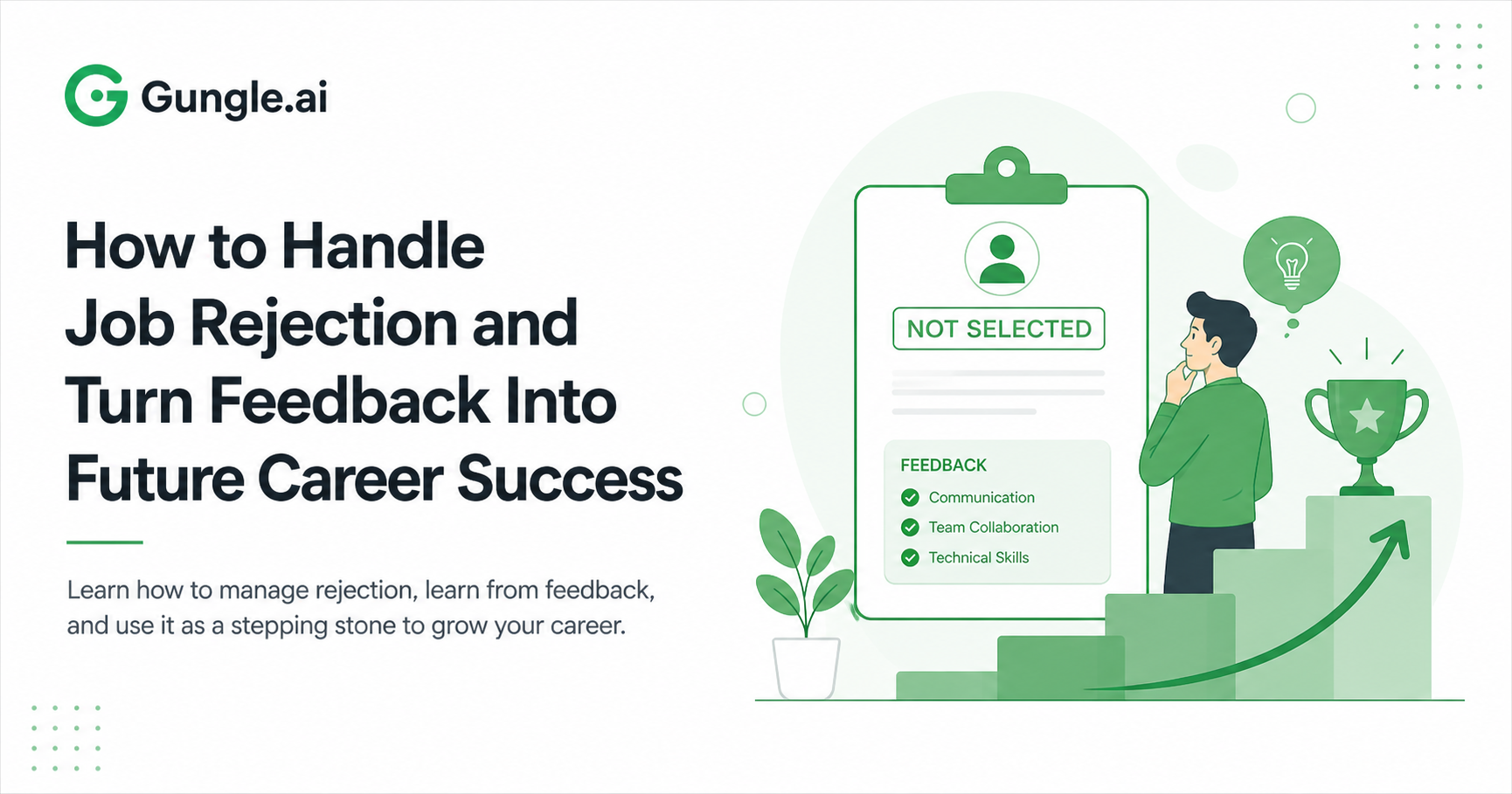
Handling Job Rejection Feedback: How to Turn “No” Into Career Success
Job rejection can feel personal, especially after several interviews or a promising conversation with a hiring manager. However, handling job rejection feedback constructively can help you strengthen your applications, improve your interview performance, and make better career decisions.
The goal is not to eliminate disappointment. It is to separate emotion from useful information, identify what you can control, and turn each experience into a practical next step.
How to Respond to a Job Rejection Professionally
Give yourself time to process the decision before replying. A short, professional response protects the relationship and may keep you in mind for future openings.
When responding to job rejection, your message should:
- Thank the employer for their time.
- Acknowledge the decision without arguing.
- Express interest in suitable future opportunities.
- Ask politely for specific feedback.
Example response:
Thank you for letting me know. Although I am disappointed, I appreciated the opportunity to learn more about the role and your team. If you are able to share any feedback on my interview or experience, I would value your perspective as I continue developing. Please keep me in mind for relevant opportunities in the future.
Avoid demanding an explanation or asking the employer to reconsider unless the message contains a clear factual error. Hiring decisions often involve several qualified candidates, so rejection does not necessarily mean you performed poorly.
Handling Job Rejection Feedback Without Taking It Personally
Not all feedback carries equal weight. Some comments identify a skill gap, while others reflect the needs or preferences of one employer.
Sort feedback into three categories:
- Actionable: “Your examples did not show enough leadership.” You can prepare stronger leadership stories.
- Context-specific: “We selected someone with experience in our industry.” This may matter for that employer but not every similar role.
- Too vague to use: “We found a better fit.” Without more detail, avoid guessing about what went wrong.
Look for patterns rather than treating one opinion as a final verdict. If several interviewers mention unclear answers, limited technical depth, or insufficient examples, you have a useful development priority.
Turn Interview Feedback Into Better Performance
Learning from interview feedback requires more than writing it down. Convert each useful comment into a specific action.
- Record the evidence. Note the questions you received, your answers, the feedback, and where you felt uncertain.
- Identify the underlying skill. A weak answer may indicate limited preparation, unclear communication, or a genuine experience gap.
- Choose one improvement activity. Practice an answer, complete a relevant project, refresh a technical skill, or revise your resume.
- Set a deadline. For example, schedule two mock interviews before your next employer interview.
- Test the improvement. Ask a trusted colleague or mentor whether your revised answer is specific and convincing.
Example: Improving a Weak Leadership Answer
Suppose an interviewer says your leadership example lacked measurable impact. Rewrite it using the STAR method: Situation, Task, Action, and Result.
Instead of saying, “I helped my team complete a difficult project,” explain the challenge, your responsibility, the actions you personally took, and the result. Use accurate details from your experience. Do not invent numbers simply to make the story sound stronger.
Create a Career Development Plan After Rejection
Career development after rejection should focus on a few high-value changes, not a complete reinvention after every unsuccessful application.
Create a 30-day plan with three areas:
- Applications: Target roles that match your core skills and tailor your resume to the stated requirements.
- Interview preparation: Build six to eight examples covering collaboration, problem-solving, conflict, leadership, mistakes, and results.
- Skill development: Address one recurring gap through practice, coursework, volunteering, freelance work, or a portfolio project.
Track outcomes such as interview invitations, later-stage interviews, and recurring questions. These indicators can show whether your strategy is improving, even before you receive an offer.
How to Overcome Job Rejection Emotionally
Overcoming job rejection does not require pretending that it does not hurt. Take a short break, speak with someone you trust, and return to your search when you can evaluate the experience calmly.
Avoid submitting dozens of rushed applications as an emotional response. A smaller number of well-matched, tailored applications is usually a more useful strategy than applying indiscriminately.
If repeated rejection is affecting your sleep, confidence, or daily functioning, consider seeking support from a qualified mental health professional.
Frequently Asked Questions
Should I always ask for feedback after a job rejection?
You can ask, but employers may be unable or unwilling to provide it. Keep the request brief and optional. A lack of feedback does not mean you made a serious mistake.
What if I disagree with the interview feedback?
Thank the employer and evaluate the comment later. You do not need to accept every opinion. Compare it with the job requirements, your performance, and feedback from other interviews before acting.
Can I apply to the same company again?
Yes, unless the employer says otherwise. Apply when a role genuinely matches your experience, particularly after you have addressed any relevant gaps. Tailor the new application rather than resubmitting the same materials.
How can I improve my job interview skills quickly?
Practice answers aloud, record yourself, complete mock interviews, and prepare specific examples. Focus first on recurring weaknesses, such as long answers, limited evidence, or unfamiliar technical questions.
Use Rejection as Career Information
Effective handling job rejection feedback means responding professionally, filtering comments carefully, and taking focused action. One hiring decision does not define your ability or career potential. Treat each interview as information that can sharpen your search and prepare you for a better-matched opportunity.
Ready to take the next step? Explore relevant job openings on Gungle.ai and discover where your skills could take you.