How to Gain Relevant Experience Through Freelance Projects, Volunteer Work, and Internships
How to Gain Relevant Experience Through Freelance Projects, Volunteer Work, and Internships
Many entry-level jobs ask for experience, but you do not need a full-time position to start building it. You can gain relevant experience through freelance projects, volunteer work, and internships while developing practical skills, portfolio samples, references, and professional connections.
The key is choosing opportunities that align with your target role and documenting what you accomplish. Here is how to turn each option into credible professional experience.
What Counts as Relevant Professional Experience?
Relevant experience is any work that demonstrates skills connected to the job you want. It can come from paid employment, coursework, independent projects, student organizations, community service, or short-term assignments.
For example, an aspiring digital marketer might manage a nonprofit’s social media calendar. A future data analyst could create a dashboard for a student organization. A career changer interested in project management might coordinate volunteers for a community event.
Employers generally care about what you did, how you approached it, and what happened as a result. A job title alone does not prove your ability.
Comparing Freelance Projects, Volunteer Work, and Internships
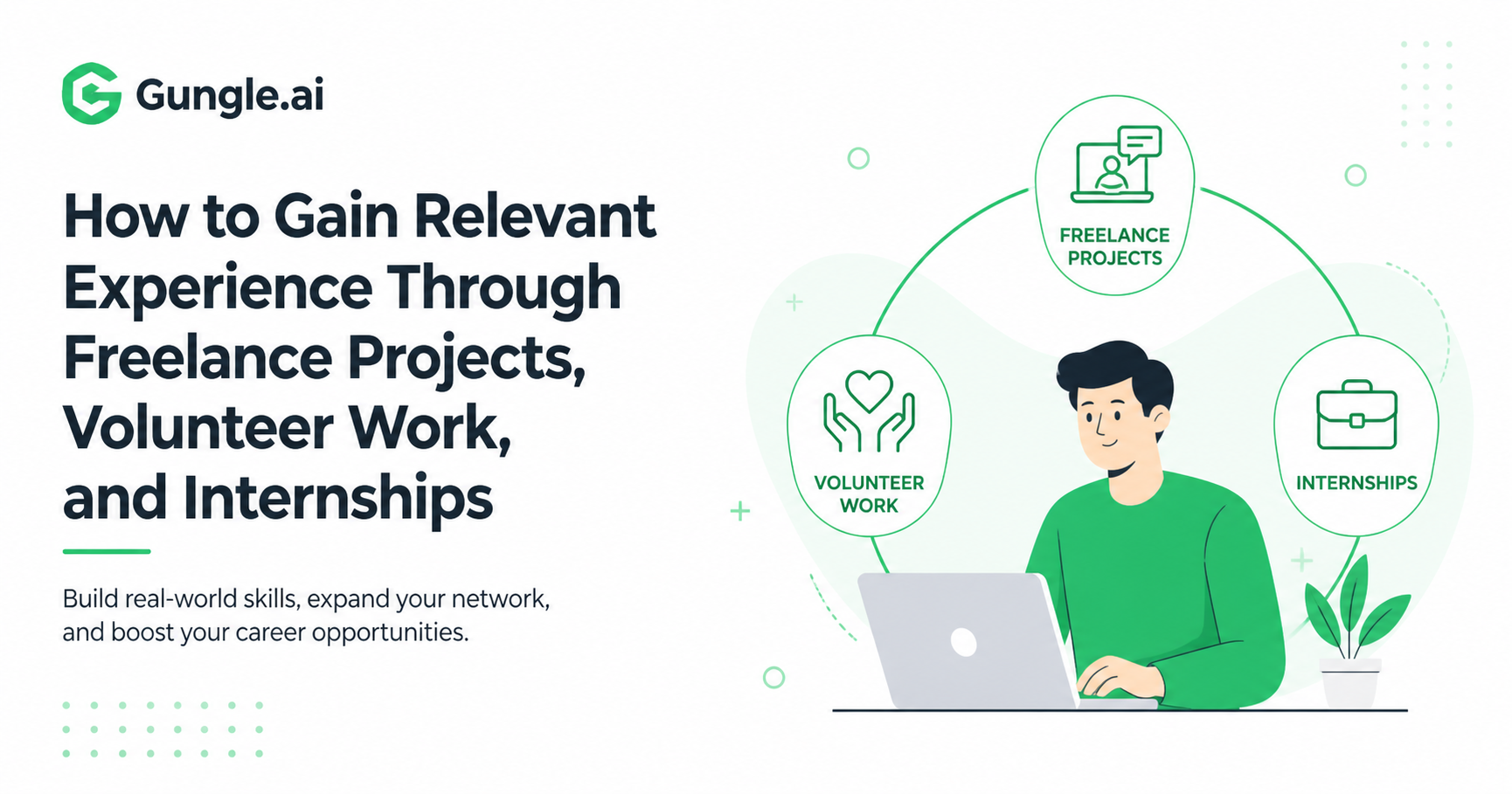
- Freelance projects: Best for gaining client-facing experience, building a portfolio, and practicing independent work.
- Volunteer work: Best for contributing to a cause while developing skills, references, and community connections.
- Internships: Best for receiving structured exposure to an industry, team, or workplace.
You do not have to choose only one. A focused combination can make building your professional experience more effective. For example, you could complete an internship, volunteer on a related project, and accept a small freelance assignment to demonstrate independent application of the same skills.
How to Gain Relevant Experience Through Freelance Projects, Volunteer Work, and Internships
Use Freelance Projects to Solve Real Problems
Freelance experience comes from completing defined work for a client, usually as an independent service provider. Beginners can start with manageable projects rather than trying to build a full freelance business immediately.
Possible projects include:
- Designing a flyer or simple brand guide for a local business
- Writing website copy or blog articles
- Building a spreadsheet that organizes sales or inventory data
- Creating a basic website for a community group
- Editing short videos for an independent creator
Before starting, agree on the scope, deadline, deliverables, payment terms, and permission to show the work in your portfolio. After completion, ask for a testimonial or reference. Never publish confidential client information.
Turn Volunteer Work Into Skill-Based Experience
Volunteer experience becomes especially valuable when your responsibilities relate directly to your career goal. Instead of accepting any available task, offer a specific skill that an organization needs.
For example, ask whether a nonprofit needs help analyzing survey responses, recruiting volunteers, updating web pages, planning events, or creating email campaigns. Request clear responsibilities and a realistic schedule before committing.
Track your contributions just as you would in a paid role. Record the tools you used, problems you addressed, deliverables you completed, and measurable outcomes you can verify.
Choose Internships With Meaningful Responsibilities
An internship is a short-term opportunity designed to provide practical workplace exposure. Strong internship experience should offer more than observation. Look for roles with defined projects, supervision, feedback, and opportunities to participate in team activities.
Before accepting, ask:
- What projects will the intern complete?
- Who provides supervision and feedback?
- Which tools or skills will the intern use?
- Is the internship paid, and what schedule is expected?
- Can completed work be included in a portfolio?
Internship compensation and eligibility rules vary by location and organization. Review the written terms carefully and prioritize opportunities that are financially and practically sustainable for you.
Build Transferable Skills Employers Can Recognize
Transferable skills are abilities you can apply across different jobs and industries. Common examples include communication, research, time management, teamwork, problem-solving, data analysis, and customer service.
Connect each experience to the requirements in job descriptions. If entry-level operations roles frequently mention spreadsheets, reporting, and process improvement, seek projects where you can practice those tasks and produce evidence of your work.
Present Your Experience on a Résumé and Portfolio
Place relevant projects under headings such as “Experience,” “Freelance Experience,” “Projects,” or “Community Leadership.” Paid status is less important than clarity and relevance, but describe the arrangement honestly.
Write résumé bullets using this structure: action + task + tool or method + verified result.
- Created a monthly email calendar for a community organization using a shared project management tool.
- Analyzed event survey responses in a spreadsheet and summarized recurring attendee feedback.
- Redesigned five website pages to improve navigation and clarify service information.
Add numbers only when you can support them. For your portfolio, include the problem, your role, your process, the final deliverable, and the outcome. If results are unavailable, explain what you learned and what you would improve.
Common Mistakes to Avoid
- Accepting work that does not develop skills relevant to your target job
- Taking on large unpaid commitments without clear learning value
- Failing to define deadlines, responsibilities, or deliverables
- Listing duties without showing decisions, tools, or outcomes
- Exaggerating results or presenting team achievements as individual work
- Waiting until a project ends to save samples and document progress
Frequently Asked Questions
Does freelance work count as professional experience?
Yes. Freelance work can demonstrate professional ability when you completed real deliverables, communicated with a client, met expectations, and represented the arrangement accurately.
Can volunteer experience go in the main experience section?
Yes. If the work is relevant to the position, you can include it alongside other experience. Label the organization and your role clearly.
How can I get experience when nobody will hire me?
Start with a small, specific project you can complete independently or for a community organization. Use the result to approach clients, internships, and entry-level employers with evidence of your skills.
Turn Experience Into Your Next Opportunity
Gaining relevant experience through freelance projects, volunteer work, and internships is not about filling space on your résumé. It is about proving that you can apply your skills, complete useful work, and learn from feedback.
Choose opportunities connected to your target role, document your results, and practice explaining your contribution in interviews. Ready to take the next step? Explore relevant job openings on Gungle.ai and see where your growing experience could take you.