How to Create a 30-60-90 Day Plan to Succeed in a New Job
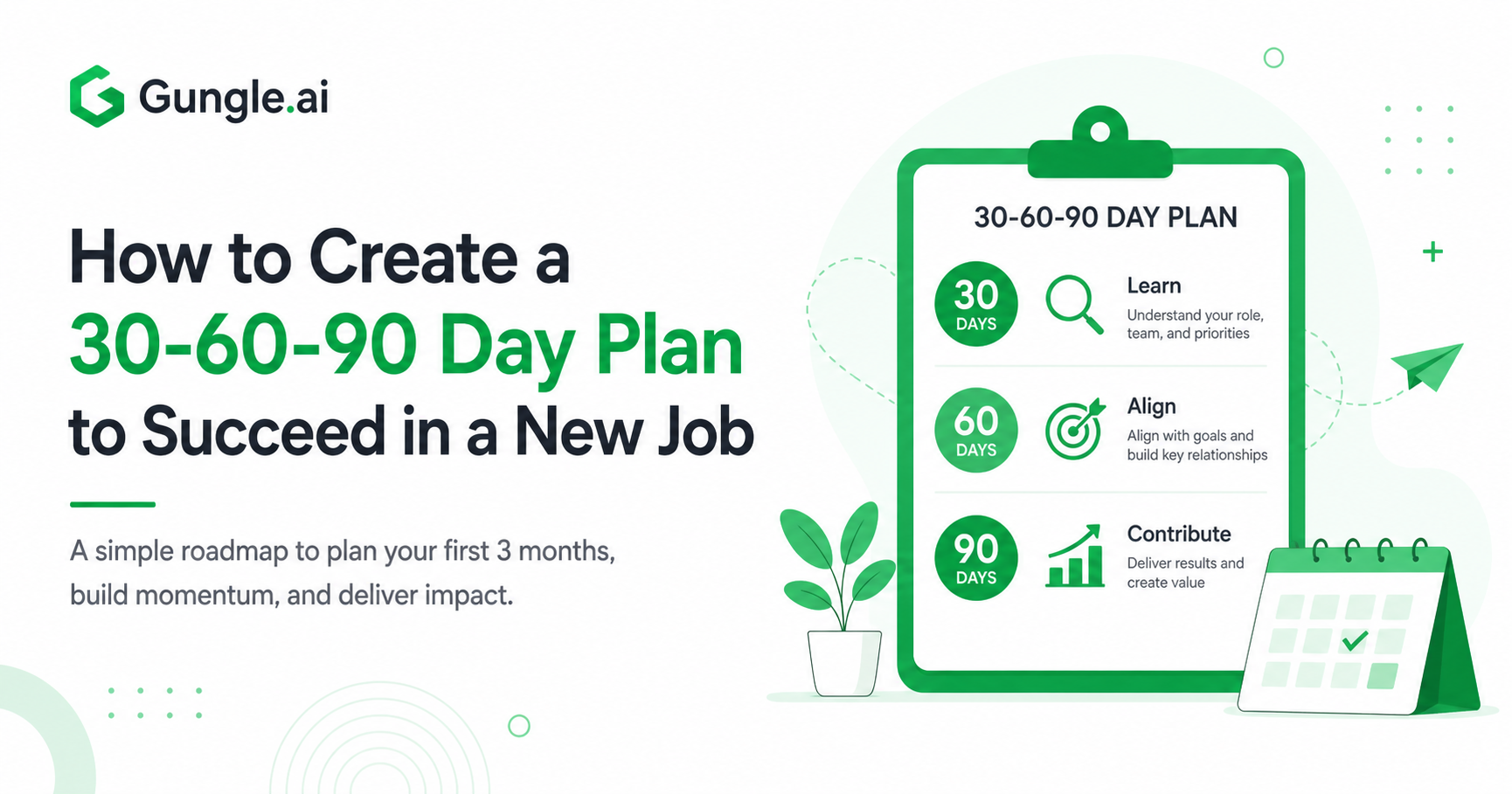
How to Create a 30-60-90 Day Plan for a New Job
Starting a new role can feel overwhelming. You need to learn unfamiliar systems, build relationships, understand expectations, and begin delivering results. A 30-60-90 day plan for a new job turns those competing priorities into a practical roadmap.
The plan divides your first three months into three phases: learning, contributing, and creating measurable impact. It can help you align with your manager, track progress, and demonstrate value without trying to change everything immediately.
What Is a 30-60-90 Day Plan?
A 30-60-90 day plan is a document outlining your goals, priorities, and actions during your first 90 days at a new job. Each 30-day phase builds on the previous one:
- Days 1-30: Learn. Understand the role, organization, customers, tools, and team.
- Days 31-60: Contribute. Take greater ownership and begin producing independent work.
- Days 61-90: Deliver. Achieve meaningful outcomes and prepare longer-term priorities.
This framework is useful for new hires, internal promotions, and career changers. However, it should remain flexible. A highly regulated role, long sales cycle, or complex technical position may require more time before measurable outcomes are realistic.
How to Build a 30-60-90 Day Plan for a New Job
1. Clarify what success means
Start with the job description, interview notes, and information from your manager. Identify the role’s core responsibilities and the outcomes you are expected to influence.
Ask your manager questions such as:
- What are the three most important priorities for this role?
- How will my performance be evaluated?
- Which projects need attention first?
- Who are my most important stakeholders?
- What should I avoid changing until I understand more?
Use the answers to shape your new employee success plan. If expectations remain unclear, make clarifying them your first milestone.
2. Set goals in four categories
A balanced plan should cover more than task completion. Organize your goals around:
- Learning: Products, processes, customers, tools, and industry knowledge.
- Performance: Projects, responsibilities, and measurable results.
- Relationships: Your manager, teammates, customers, and cross-functional partners.
- Development: Skills or knowledge you need to strengthen.
Make each goal specific and observable. Replace “learn the business” with “complete product training, review the team’s quarterly goals, and meet five key stakeholders.”
3. Add actions, milestones, and evidence
For every goal, identify what you will do, when you will do it, and how progress will be demonstrated. Evidence might include completed training, documented feedback, a delivered project, or improvement against an agreed performance measure.
Do not choose metrics without your manager’s input. The right measures vary by role, organization, and seniority.
30-60-90 Day Plan Template
Use this practical 30-60-90 day plan template as a starting point. Adjust the pace to match your position.
Days 1-30: Learn and connect
- Confirm responsibilities, priorities, and performance expectations.
- Complete required training and gain access to essential tools.
- Review team goals, current projects, and relevant documentation.
- Schedule introductory meetings with key stakeholders.
- Observe workflows before recommending major changes.
- Agree on regular check-ins with your manager.
Example: A new marketing specialist might study brand guidelines, review recent campaigns, learn the analytics platform, and meet colleagues in sales and product.
Days 31-60: Contribute and test
- Take ownership of recurring tasks or an initial project.
- Apply what you learned to solve a defined problem.
- Request feedback from your manager and collaborators.
- Identify one realistic process improvement.
- Address important skill or knowledge gaps.
Example: The marketing specialist could launch a small campaign, report early results, and recommend a clearer content approval process.
Days 61-90: Deliver and plan ahead
- Complete a meaningful project or reach an agreed milestone.
- Work independently on core responsibilities.
- Document results, lessons, and unresolved risks.
- Strengthen partnerships across the organization.
- Create goals for the next quarter with your manager.
Example: The specialist might present campaign results, explain what should be improved, and propose a data-informed plan for the next quarter.
How to Use Your Plan Successfully
Share your draft with your manager during your first week rather than treating it as a private checklist. Ask whether the priorities, timing, and success measures are realistic.
Review the plan weekly and update it when business needs change. During manager check-ins, discuss completed actions, obstacles, feedback, and next steps. This makes your new job onboarding plan a working document instead of a one-time exercise.
If you are changing industries or functions, include extra learning time in your career transition plan. Transferable skills remain valuable, but unfamiliar terminology, systems, and decision-making processes may require deliberate study.
Common Mistakes to Avoid
- Setting too many goals: Focus on a few priorities that matter to the team.
- Promising results too early: Learn the context before committing to major changes.
- Ignoring relationships: Sustainable results often depend on collaboration.
- Using vague milestones: Define what completion or progress looks like.
- Refusing to adapt: A good plan changes when you receive better information.
Frequently Asked Questions
Should I create a plan before starting my new job?
You can prepare a draft using the job description and interview information. Finalize it after discussing actual priorities with your manager.
How detailed should the plan be?
Keep it concise enough to review regularly. Include goals, actions, timing, evidence of progress, and any support you need.
What if my company already has an onboarding program?
Use both. The company program covers required orientation, while your personal plan connects onboarding activities to role-specific outcomes and career goals.
Start Your First 90 Days with Purpose
A strong 30-60-90 day plan for a new job gives you direction without locking you into assumptions. Learn first, contribute thoughtfully, measure progress, and revise the plan with your manager. That approach can help you build trust and establish a foundation for long-term success.
Ready to take the next step in your career? Explore relevant job opportunities on Gungle.ai and see where your skills could take you.